

Curriculum
Montessori Education
Maria Montessori was born in Italy in 1870. She became the first female doctor in Rome by the age of 26. Later, she devoted herself to the study of medical service and education of children with mental disabilities. She utilized her skills in medicine and science, and designed an education model to help the children out. After that, she applied her education theory into normal children and set up the first ‘children’s home’ in Rome. Gradually, she developed a systemic and scientific teaching model for children. Many countries still adopt this education model.
Montessori learning is divided into 5 areas:
Core Values


Religious Education
Children learn values such as kindness, respect, compassion, gratitude, and caring for others through age-appropriate stories, songs, prayers, and celebrations.
We welcome families of all faiths and backgrounds and strive to create a caring, respectful, and inclusive community where every child feels valued and supported.
Spacious and Engaging Learning Environment
Children explore, create, and grow at their own pace, guided by caring staff in calm, inspiring classrooms. We provide several in-house specialized programs, including:
- Language Enrichment Program
- A dynamic Art Program
- An enriching Music Program
- Captivating Bible Story sessions

Program Classification
Children should fall within their respective age groups by the end of the year.

Nido
ages 12m – 19 months

Bambini
ages 19m – 36 months

Casa
ages 3y – 6 years
Aim: develop children’s concentration, physical coordination, obedience and independence.
Content
Includes etiquette, body control, body coordination, taking care of themselves, caring about the environment, food preparation…etc.
Methods
To foster the comprehensive development of body movement, spirit, mind and virtue by teaching students to master the daily living skill. It can also motivate them to create a better being of themselves.

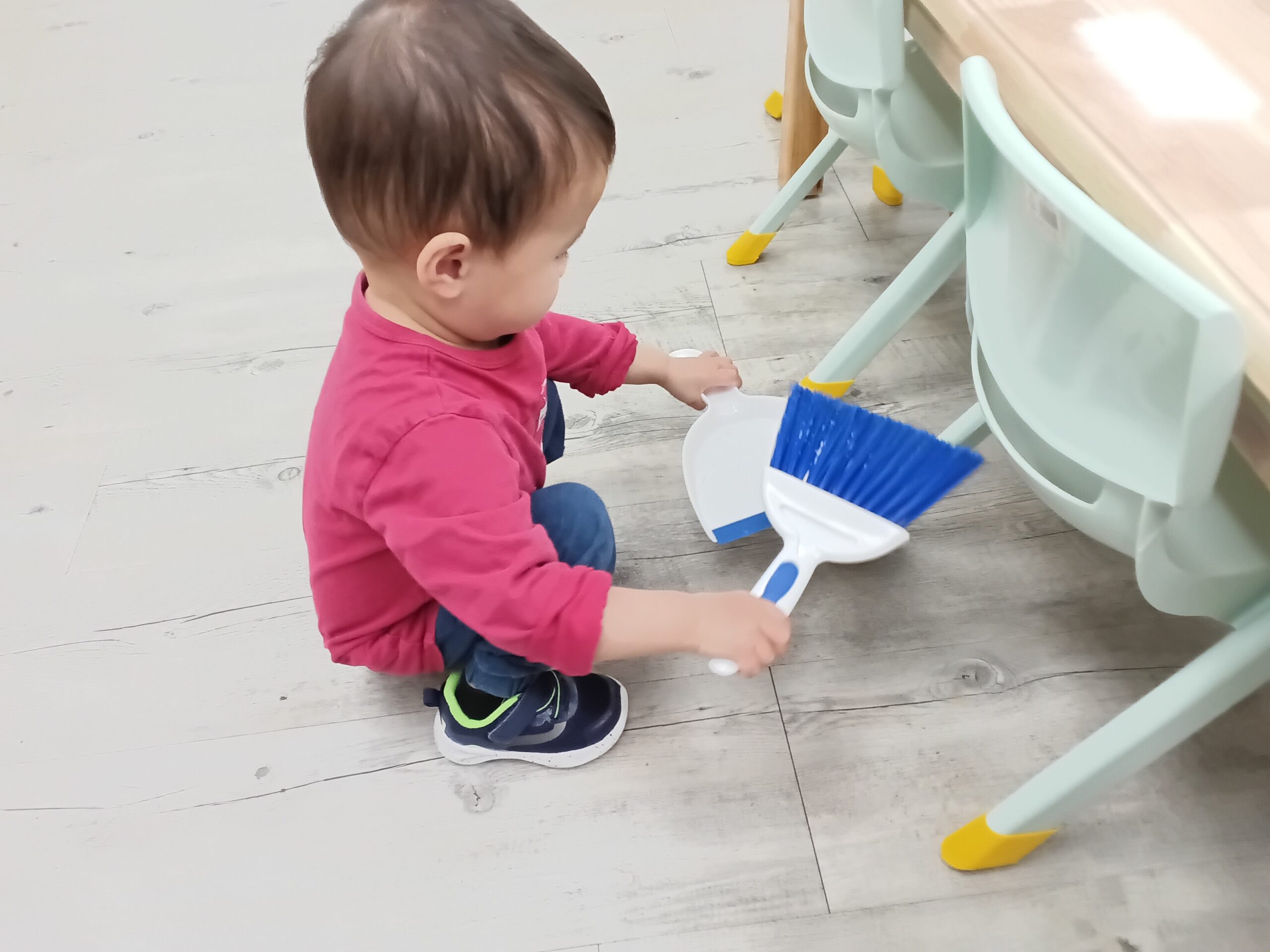
The first aim of the prepared environment is, as far as it is possible, to render the growing child independent of the adult
Maria Montessori, The Secret of Childhood
The senses, being the explorers of the world, open the way to knowledge
Maria Montessori, The Absorbent Mind
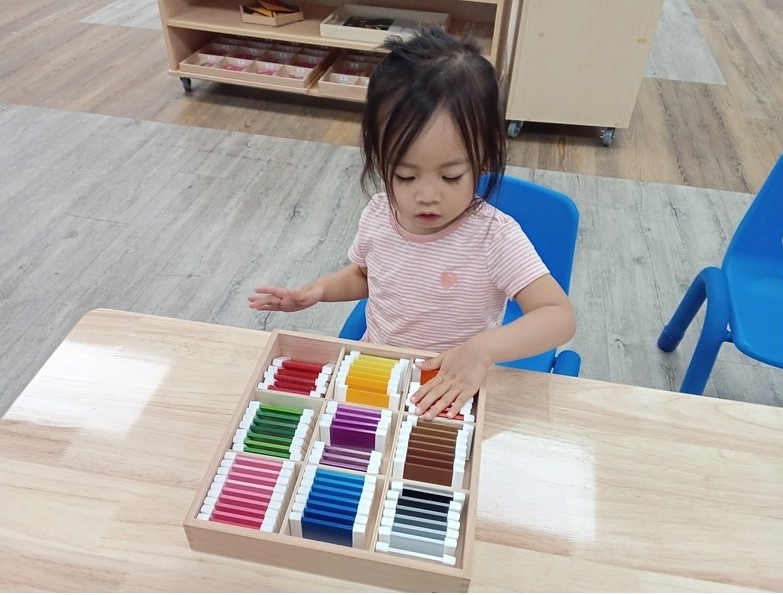
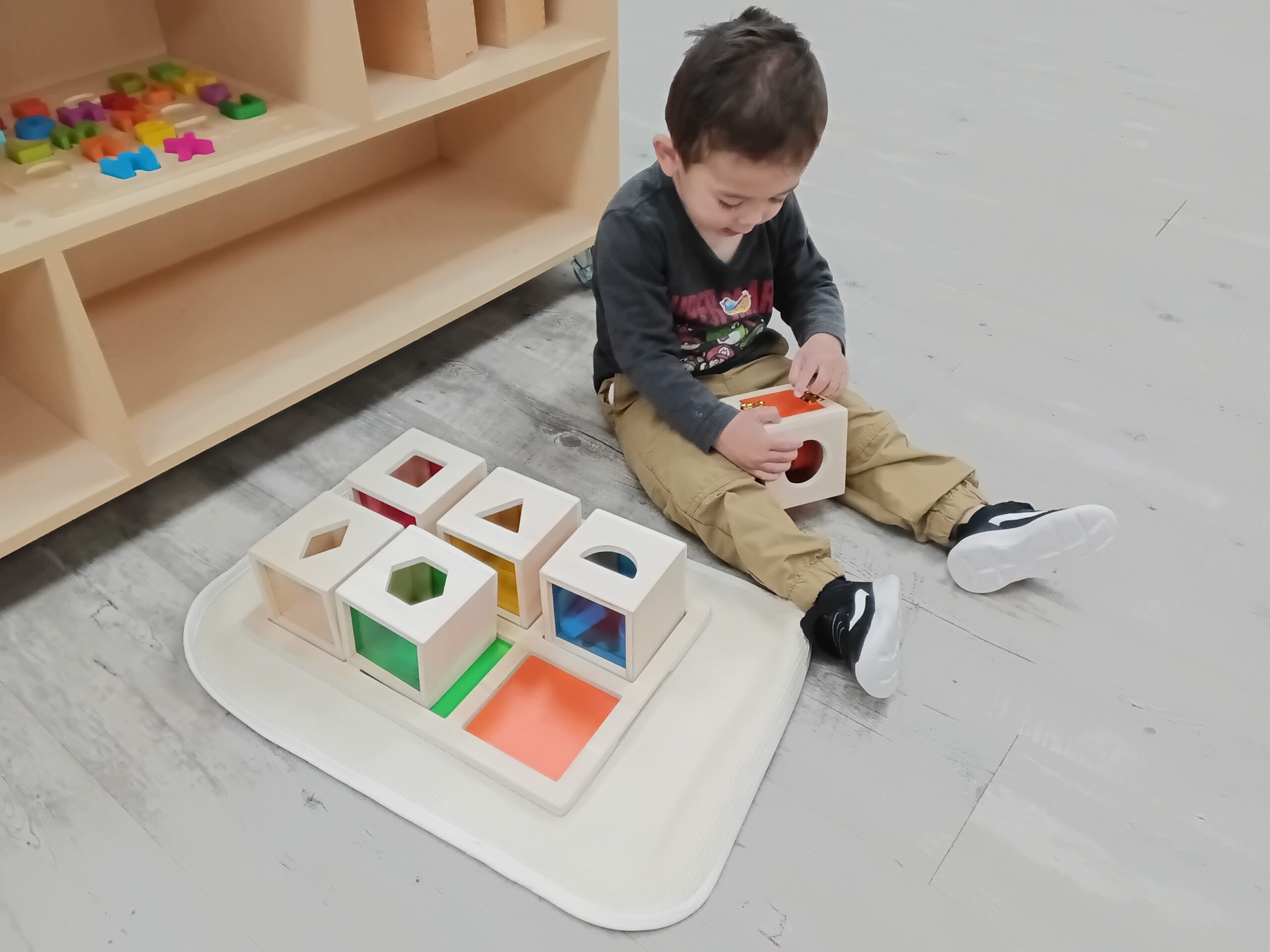
Aim: to foster sensitivity of five senses and develop the skill of logical thinking
Content
Develop the five senses including seeing, hearing, touching, smelling and tasting etc.
Methods
To guide children to learn by matching, categorization, sequence. Let them make use of the three-period lesson to foster their learning.
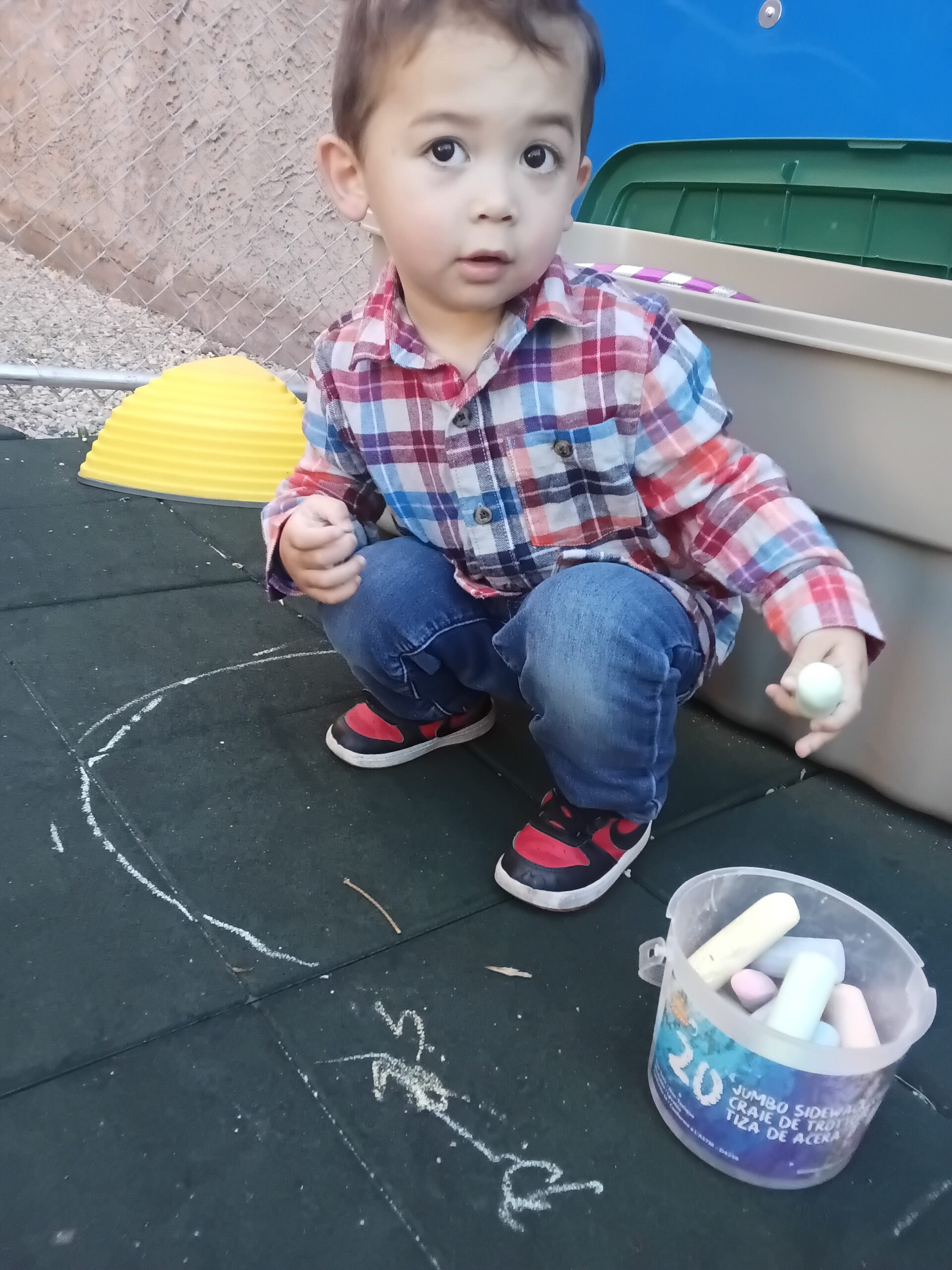
Aim: to foster children’s ability in listening, communication, comprehension, express, imagination and language etiquette.
Content
to be divided into listening, speaking, writing, and reading. This includes listening, visual and verbal drilling, development of value, preparation in writing and reading in practice.
Methods
to improve student’s language ability under a multilingual learning environment; bring up children’s interests in reading, questioning, and expressing opinions.
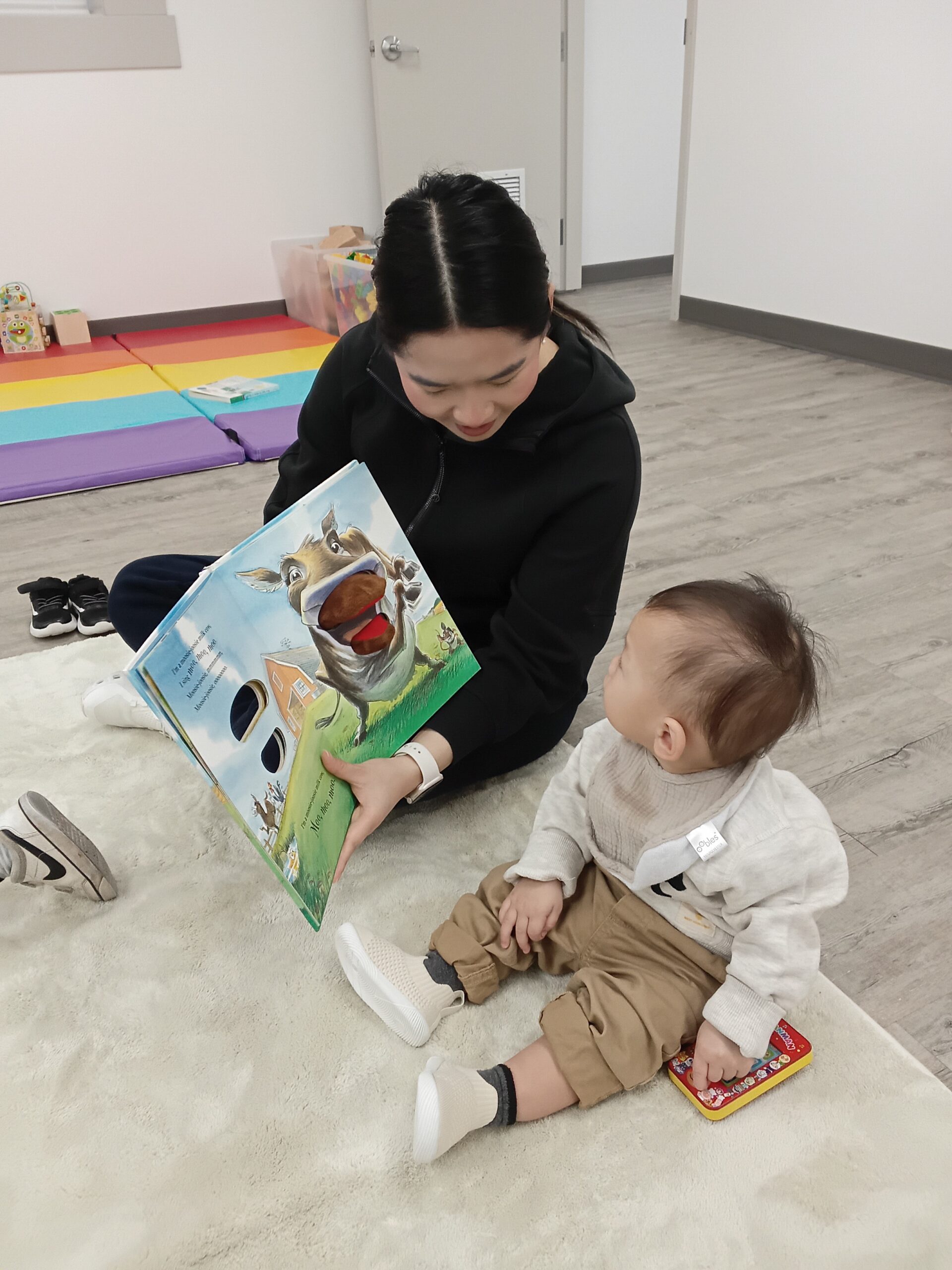
When we teach a child to read, we are teaching him to think. We are opening the doors to new worlds and giving him the keys to all knowledge.
Maria Montessori, The Absorbent Mind
The human mind is mathematical by nature, and the child who is free to work with his hands shows a universal love for mathematics.
Maria Montessori, paraphrased from various lectures and writings
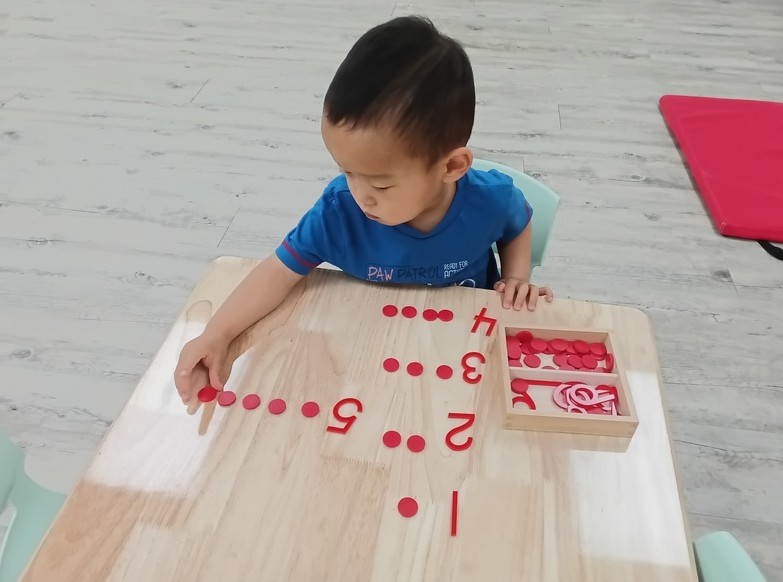
Aim: to foster the basic Mathematics abilities (Logic, shape, space, quantity, number) and learn about the language and symbol of Mathematics.
Content
to launch preschool Mathematic education. Children learn about 1-10, consecutive number, introduction to names of decimal units, calculation and memorizing decimals, six parts of fraction.
Methods
to guide children to observe and explore in order to develop concept, help them to distinguish differences, categorize and make judgment to solve problems.

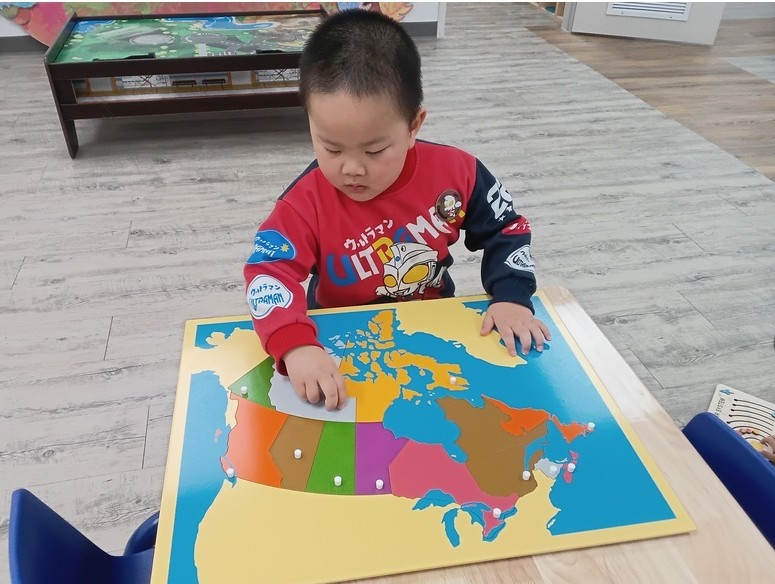
Aim: to let children know more about the nature and humanity understand how to respect themselves and others, cherish life, love the world, and care about the environment.
Content
History, geography, plant, animals, astronomy and geology…etc.
Methods
Through observation and exploration, children are able to broaden their horizon and become a resilient observant in society.
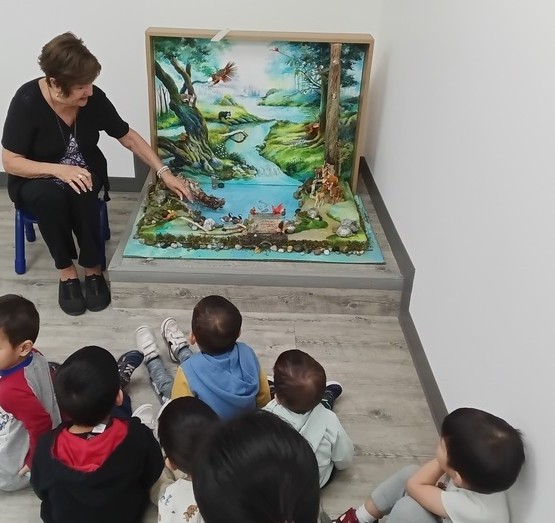
The environment must be rich in motives which lend interest to activity and invite the child to conduct his own experiences
Maria Montessori, The Secret of Childhood
Remarks
Example of what a three-period lesson includes:
1
1st Stage
Naming
Develop an association between an object and its name.
Example: Tell children “This is …”
2
2nd Stage
Recognizing
To make sure children know the names of the objects.
Example: Tell children “Please give me…”
3
3rd Stage
Remembering
Association between names and objects, or regeneration of memory toward the names of objects.
Example: Ask children “What is this?” “What is the name of this?”
Our Core Values
F
Building strong partnerships with parents and Families to support children’s development.
I
Fostering a welcoming and Inclusive environment where all children feel valued and belong.
R
Recognizing and meeting each child’s unique needs and abilities.
S
Ensuring a physically and emotionally Safe environment for all children.
T
Treating every child with respect and dignity, regardless of their background or abilities.